AliExpress Tariffs 2026: What’s Changed and What It Means for Buyers
The tariff rules covering small parcels from AliExpress to the United States and other Western markets have changed significantly over 2024 and 2025, with further changes expected in 2026. If you buy from AliExpress regularly — either for personal use or for dropshipping — understanding what has changed and what it means for your costs is essential.
What Was the De Minimis Rule and Why Did It Matter for AliExpress?
The de minimis rule in the United States allowed individual shipments valued at $800 or less to enter the country duty-free and without formal customs entry. Because most AliExpress orders are low-value individual parcels shipped directly to US consumers, the vast majority of AliExpress packages entered the US under this exemption — paying no duty at all, regardless of their country of origin.
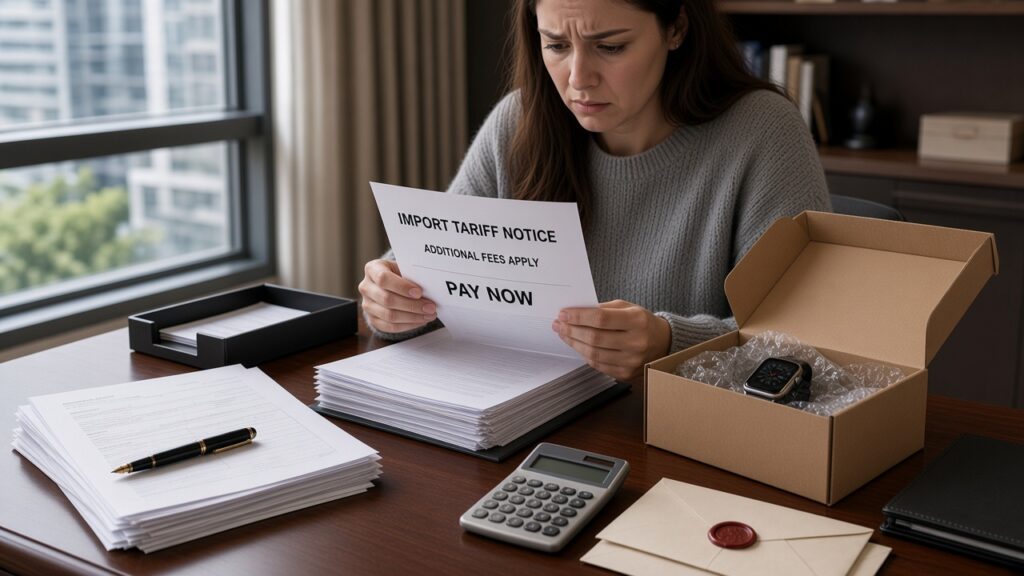
This meant that a $30 order from AliExpress paid no import duty, while a US retailer who imported the same goods in bulk from China had to pay Section 301 tariffs of 7.5–25% plus the standard MFN duty rate. The asymmetry was widely criticised as putting US retailers at a competitive disadvantage.
What Changed With the De Minimis Exemption for Chinese Goods?
In 2024, the Biden administration proposed restricting the de minimis exemption for goods subject to Section 301 tariffs — meaning goods from China in categories with tariff rates of 7.5% or 25%. Under the proposed change, those goods would no longer qualify for duty-free entry even at low values.
In 2025, executive orders went further: the de minimis exemption was suspended for all goods from China and Hong Kong, regardless of category or value. Shipments from China — including AliExpress packages — became subject to duties on entry. The practical implementation involved a flat-rate duty option for small parcels to simplify processing.
These changes directly affect AliExpress and similar platforms (Temu, Shein) that relied on the de minimis exemption to ship duty-free to US consumers. Prices on those platforms have increased for US buyers, delivery times have lengthened as customs processing adapts, and some sellers have adjusted their shipping strategies.
What Does This Mean for AliExpress Prices in 2026?
The direct impact on prices depends on the product category:
- Products in categories with high Section 301 tariffs (25%) will see the largest price increases for US buyers — particularly electronics, apparel, and furniture categories that were previously entering duty-free
- Products in categories with lower tariff rates (7.5%) will see smaller increases
- The flat-rate duty option for small parcels (where applicable) simplifies the calculation but may not reflect the actual tariff rate for a specific product
For consumers buying occasional items for personal use, the impact is a moderate price increase on most orders — probably 10–30% depending on the product category. For dropshippers who have built a business model around duty-free AliExpress shipments, the impact on margins is much more significant.
Has the De Minimis Rule Changed in Other Countries?
The US changes have drawn attention to similar rules in other markets:
- European Union: The EU eliminated its €22 de minimis threshold in 2021, meaning all goods from outside the EU now pay VAT regardless of value. Import duties still apply a threshold (€150 for customs duty, with VAT on all values). The EU has also introduced new platform liability rules under the Import One Stop Shop (IOSS) scheme.
- United Kingdom: The UK has a £135 threshold for customs duty (meaning low-value goods pay VAT but not customs duty). There is ongoing discussion about whether to follow the US in restricting the threshold for Chinese goods specifically.
- Australia: Australia charges GST on all imports regardless of value (since 2018) but has a higher threshold for customs duty.
What Does This Mean for Businesses Buying From AliExpress?
If you have been using AliExpress to source goods for resale — either as a dropshipper or by buying small quantities to resell — the tariff changes mean the economics of your model have changed. The key questions to reassess:
- Are your AliExpress unit costs still competitive once duty is included?
- Is it now worth moving to a bulk import model — buying larger quantities from an Alibaba or 1688 supplier, importing them in one shipment, and paying duty once on the bulk order rather than on each individual parcel?
- Can you find a supplier who warehouses goods in your destination country (or a country with preferential trade terms) and ships from there?
For buyers who want to understand what Chinese factories actually charge for the goods they are sourcing — before markup by AliExpress sellers — the Price Benchmark Check service from MandarinDesk searches 1688 and Alibaba for comparable listings, giving you the domestic Chinese wholesale price as a reference point.
Does AliExpress charge tariffs and import charges?
AliExpress does not set import duty. Customs in your country does, based on the value and type of goods and the local rules. Depending on the country and the order, tax or duty may be collected at checkout or billed on delivery, so read the checkout page.
Low-value parcel rules are changing. Public reports say the US suspended its de minimis duty exemption from 29 August 2025, and that the EU’s 150 euro duty exemption ended on 1 July 2026 with a temporary flat duty of 3 euros per item. Check your customs authority for the current rules. See de minimis, DDU vs DDP and what to do when a package is stuck in customs.
Frequently asked questions
Does AliExpress charge tariffs?
AliExpress does not set duty. Customs does, and in some countries the tax is collected at checkout while in others it is billed on delivery.
Is there a de minimis exemption for AliExpress orders?
Rules are changing. Reports say the US suspended its de minimis exemption in August 2025 and the EU ended its 150 euro duty exemption in July 2026. Check your customs authority.
Who pays customs duty on an AliExpress parcel?
It depends on the country and the order. Read the checkout page and your delivery notice to see whether duty is prepaid or due on arrival.
Related reading
Need a hand?
Tell us what you need done in China. We reply within 24 hours with a fixed price and timeline.
Get a free quote →