Managing a Supply Chain From China: A Practical Guide for International Buyers
Managing a supply chain from China means coordinating everything that happens between placing a purchase order and receiving goods at your destination — from factory communication and production oversight to quality control, freight, and import clearance. For buyers managing this from outside China, the main challenges are distance, language, time zone differences, and limited visibility into what is actually happening at the factory. This guide covers the practical steps that make remote supply chain management work.
What Does Managing a China Supply Chain Actually Involve?
The key activities in managing an ongoing supply chain from China are:

- Supplier management: Maintaining relationships with one or more factories, communicating specifications clearly, and negotiating pricing and terms on each order
- Order placement and tracking: Sending purchase orders, confirming receipt and production schedules, and following up on production milestones
- Quality control: Reviewing samples, monitoring production standards, and arranging inspections before goods ship
- Documentation: Ensuring the factory provides accurate packing lists, commercial invoices, certificates of origin, and any product certifications required for import
- Logistics coordination: Arranging freight from the factory to your destination, managing customs clearance, and tracking shipments
- Dispute resolution: Handling problems when goods are wrong, late, or damaged
How Do You Communicate Effectively With a Chinese Factory?
Communication is where most problems in China supply chains originate. English is a second language for most factory staff, and nuance and technical detail are often lost in translation. Practical steps that reduce miscommunication:
- Use written purchase orders, not verbal agreements: Put every specification, price, payment term, and deadline in writing. A WeChat conversation is not a purchase order.
- Use simple, unambiguous language: Avoid idioms, abbreviations, and complex sentence structures. Write as if you are writing for someone reading in their second language — because you are.
- Confirm understanding with specific questions: Instead of asking “did you understand?” (which always gets a yes), ask “what is the production completion date?” or “what colour will the packaging be?” to verify that the factory has absorbed the key details.
- Establish a regular check-in rhythm: Weekly or bi-weekly updates during production — a brief written report on quantity completed, any issues, and expected completion — give you early warning of problems before they become crises.
- Use photos and diagrams: A photo of the approved sample, a diagram of the packaging layout, or a photo of the defect you want corrected is worth ten paragraphs of written description.
What Is the Best Way to Monitor Production Without Being On-Site?
When you cannot visit the factory in person, these methods provide useful production visibility:
- Production photos at key milestones: Request photos when raw materials arrive, when the first units come off the line, and when the batch is complete and ready for packing. Many factories will share these on WeChat without additional prompting once they know you expect them.
- Video calls: A live video call showing the production floor is harder to fake than photos and gives a real-time sense of progress. Schedule these at meaningful milestones — first article review, mid-production check, pre-pack review.
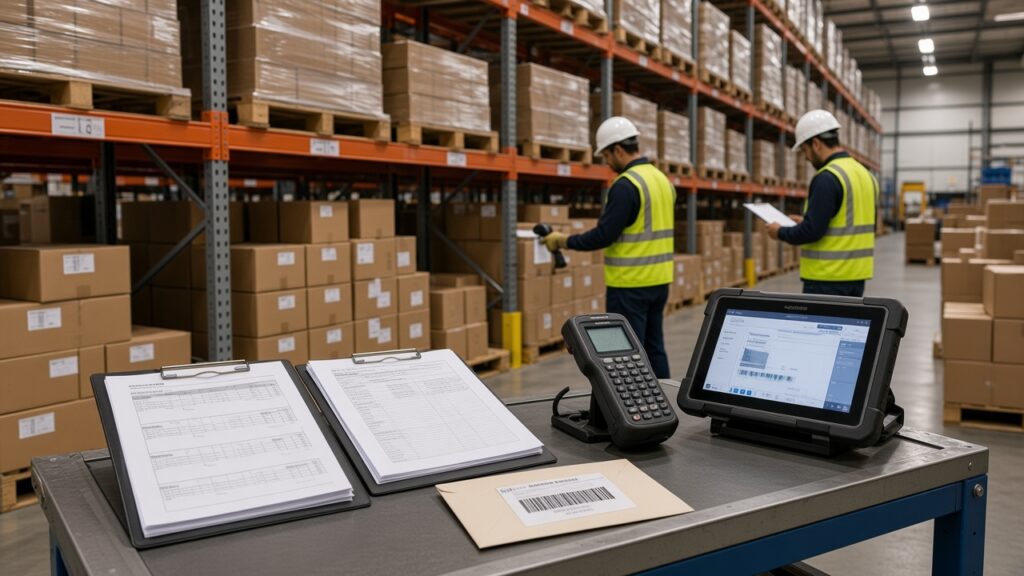
- Third-party inspection: When the production run is 80–100% complete, an independent inspector visits the factory, checks a sample against your specification, and issues a report within 24–48 hours. This is the most reliable method and the one that provides the most defensible record if a dispute arises.
How Do You Handle a Quality Problem Discovered After Goods Arrive?
Discovering a quality problem after goods have arrived in your country and cleared customs is the most difficult situation in supply chain management. Your options are limited because:
- Returning goods to China is expensive and rarely practical
- Chinese suppliers have limited legal obligation once goods are accepted and paid for
- Proving the fault was the factory’s (rather than damage in transit or misuse) requires documentation you may not have
The best leverage you have when a problem is discovered is:
- A clear written specification that the goods deviate from
- A pre-shipment inspection report showing the problem existed before goods left China (if the inspection was done and noted the issue)
- An ongoing trading relationship — a supplier who wants future orders has an incentive to resolve the problem; a one-time supplier does not
- Payment not yet released — if any part of the balance is still outstanding, this is leverage to negotiate a remedy
The most effective way to handle quality problems is to prevent them from reaching your warehouse in the first place, through clear documentation and inspection before shipment.
What Documentation Should You Keep for Each Order?
A well-managed China supply chain maintains the following for each order:
- Signed purchase order with all specifications, pricing, and payment terms
- Approved sample photos (and physical sample, if possible)
- Quality specification or inspection checklist agreed before production
- Pre-shipment inspection report (if conducted)
- Commercial invoice and packing list as issued by the factory
- Bill of lading or airway bill
- Certificates of origin and any product certifications
- Customs entry documentation and duty receipts
This documentation serves as a record of what was agreed, what was inspected, and what arrived — essential if any element of the supply chain is later disputed.
Which Parts of Supply Chain Management Can Be Outsourced?
Buyers who lack the internal resources to manage every element often outsource specific tasks:
- Translation of supplier messages: When a factory communicates in Chinese — in WeChat, in product specifications, or in documents — having the content translated accurately avoids costly misunderstandings. MandarinDesk’s Chat Translation service handles individual messages and screenshots.
- Price verification: Before accepting a quote, checking whether the price is in line with the domestic Chinese market. The Price Benchmark Check service searches 1688 and Alibaba for comparable listings.
- Sample review: When a factory sends sample photos, having a structured review against a checklist before approving production. The Sample Photo Review service provides this for $25 per batch.
- Freight and customs: Most buyers use a freight forwarder for international shipping and a licensed customs broker for import clearance — these functions are routinely outsourced even by experienced importers.
Related reading
Need a hand?
Tell us what you need done in China. We reply within 24 hours with a fixed price and timeline.
Get a free quote →