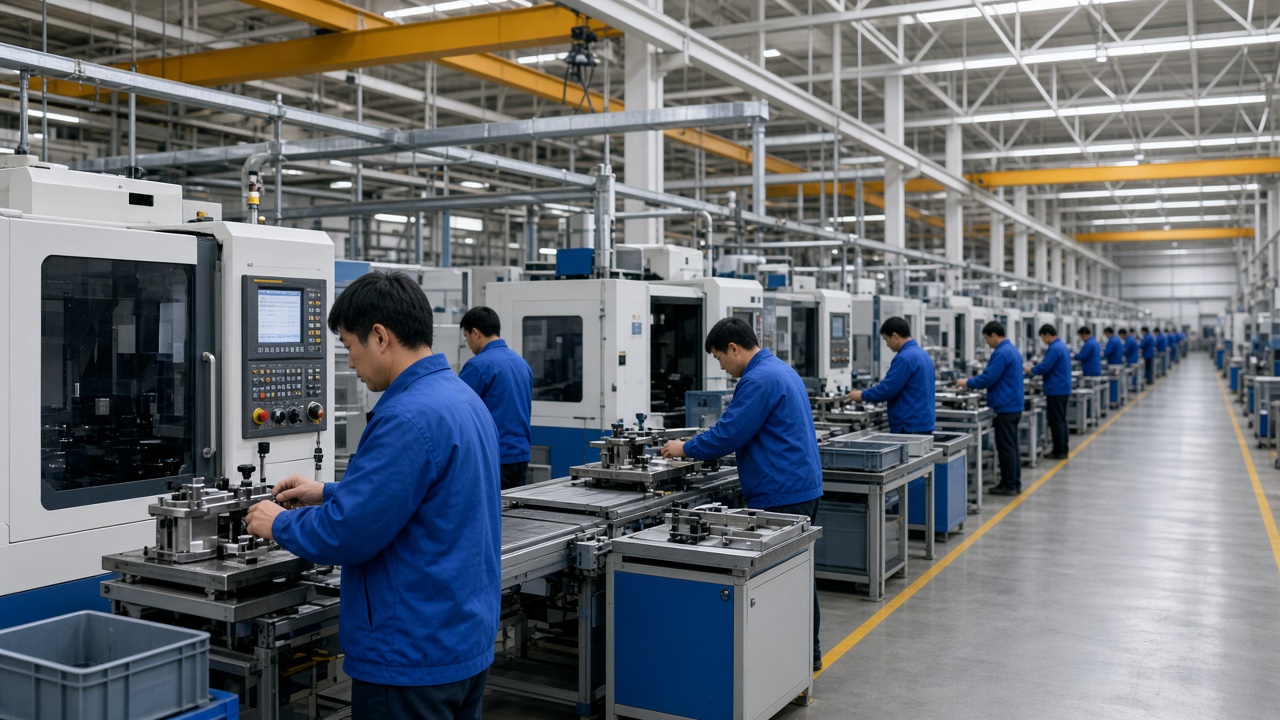
What Is Contract Manufacturing? How to Find a Contract Manufacturer in China
Contract manufacturing means hiring a factory to produce goods on your behalf, to your specification, under your brand. Rather than building your own production facility, you outsource the manufacturing to a specialist factory. China is the most common destination for contract manufacturing because of its combination of low costs, large factory capacity, and deep expertise across almost every product category.
What Is Contract Manufacturing?
In a contract manufacturing arrangement, you (the brand owner or buyer) retain ownership of the product design, the brand, and the customer relationship. The contract manufacturer produces the product to your specification and delivers it to you. They do not sell the product under their own brand.

Contract manufacturing is different from buying a standard product off a supplier’s shelf (which is trading) and from white-label or private label (where the factory owns the design and you just apply your brand). In a true contract manufacturing arrangement, the buyer drives the product specification, and the factory executes it.
How Is Contract Manufacturing Different From OEM?
The terms “contract manufacturing” and “OEM” (Original Equipment Manufacturer) are often used interchangeably, and in practice they frequently overlap. The distinction matters most in a strict legal or IP context:
- Contract manufacturing: Emphasises the contractual relationship — you have a formal agreement with the factory specifying what they will produce, to what standard, at what price, and by when. The contract governs the relationship.
- OEM: Emphasises the ownership of the design — you own the design and the factory manufactures to it. The term is used loosely in Chinese trade to mean any arrangement where a factory produces for a foreign buyer’s brand.
For practical sourcing purposes, the terms describe the same thing: you provide the specification, the factory produces to it, and you brand and sell the output.
What Industries Use Contract Manufacturing in China?
Contract manufacturing from China is used across almost every consumer and industrial product category. Common examples include:
- Consumer electronics and accessories
- Apparel, footwear, and textiles
- Housewares, kitchenware, and home goods
- Toys and games
- Health and beauty products
- Sporting goods and outdoor equipment
- Industrial components and machinery parts
- Packaging materials
How Do You Find a Contract Manufacturer in China?
The process of finding a suitable contract manufacturer follows the same path as finding any Chinese factory:
- Define your requirements precisely: Before approaching factories, document your product specification in as much detail as possible — materials, dimensions, tolerances, performance requirements, packaging, and quantity. Vague briefs produce vague quotes.
- Search the right platforms: Alibaba is the starting point for most categories. For industrial products, Made-in-China.com and Global Sources are also worth searching. For the domestic Chinese price benchmark, search 1688 using Chinese keywords.
- Shortlist three to five factories: Look for factories with verified business registration, relevant certifications, production experience in your category, and reasonable response rates. Avoid factories registered less than 12 months ago for a first significant order.
- Send an RFQ: A Request for Quotation should specify your product requirements, expected quantity, delivery timeline, and any certification requirements. Provide a drawing or reference sample wherever possible.
- Compare quotes carefully: Price differences between factories often reflect differences in material specification, quality standard, or included services rather than margin. The cheapest quote is not always the best value.
- Order samples: Before committing to production, order samples from your top two or three candidates. Evaluate quality, consistency, and how well each factory communicates during the sampling process.
- Visit or audit the factory: For significant orders, an on-site factory audit or at minimum a video call factory walkthrough confirms that the factory is what it claims to be before you place a production order.
What Should Be in a Contract Manufacturing Agreement?
A formal contract manufacturing agreement (sometimes called a supply agreement or purchase agreement) should cover:
- Product specification: Detailed description of what is to be produced, referencing approved samples or engineering drawings
- Quality requirements: AQL levels, testing requirements, and what constitutes a defect
- Pricing and minimum orders: Unit price at specified quantities, any tooling costs, and what happens if volumes change
- Payment terms: Deposit percentage, balance trigger, payment method
- Lead time and delivery: Production start date, completion date, and consequences for delays
- Intellectual property: Confirmation that the buyer owns the product design and that the factory may not manufacture the product for any other buyer
- Mould and tooling ownership: Who owns the production tooling and what happens to it if the relationship ends
- Confidentiality: Non-disclosure of the buyer’s product designs, customer information, and business plans
Having a contract reviewed before signing is advisable for significant production arrangements. If the factory sends a contract in Chinese, MandarinDesk’s Quick Quote Scan service reviews short supplier documents and flags any terms that differ from what you agreed or that are unusual in Chinese trade agreements.
Related reading
Need a hand?
Tell us what you need done in China. We reply within 24 hours with a fixed price and timeline.
Get a free quote →