Private Label Manufacturing in China: A Complete Guide for Beginners (2026)
Private label manufacturing means sourcing a product from a factory, putting your own brand name on it, and selling it as your own. China is the most common destination for private label production because it combines low unit costs, enormous factory capacity, and the ability to customise products at relatively small quantities. This guide explains how the process works and what buyers need to know before they start.
What Is Private Label Manufacturing?
In private label manufacturing, a factory produces a product to your specifications and labels it with your brand rather than its own. The factory may already manufacture the same product for other brands, or it may produce a customised version exclusively for you. You own the brand; the factory owns the production process.
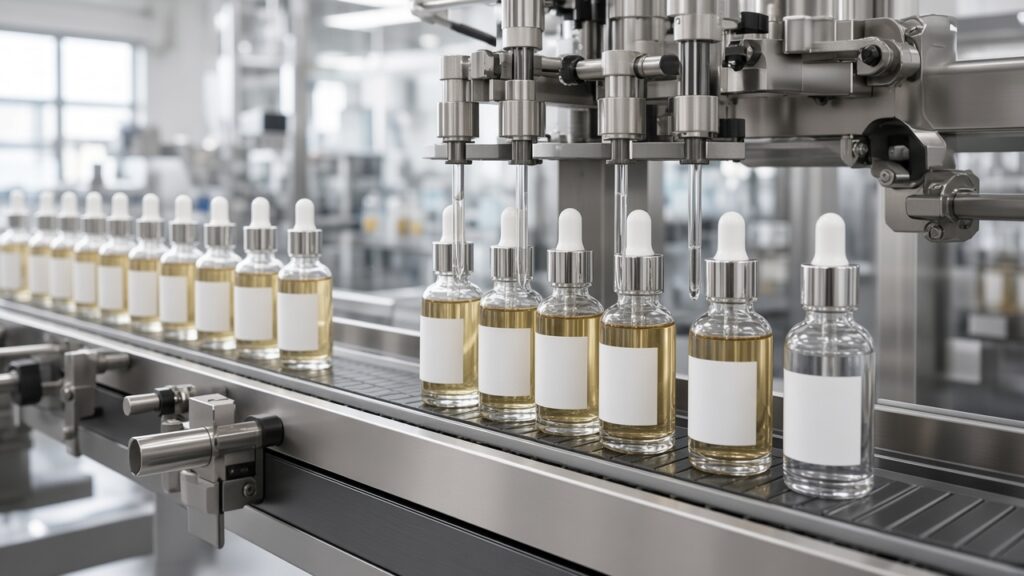
This is different from white label, where you buy a standard product as-is and simply add your label, and from OEM (original equipment manufacturer) production, where the product is designed entirely to your specification from the ground up. Private label typically falls between the two: some customisation of an existing product, with your branding applied.
Why Do Buyers Use China for Private Label?
China has the largest manufacturing base in the world, covering almost every product category. The main reasons buyers choose China for private label production are:
- Unit cost: Factory prices in China are typically lower than equivalent production in Europe, North America, or even Southeast Asia for most consumer goods categories.
- Low minimum order quantities: Many Chinese factories accept private label orders starting from 100 to 500 units, which is far lower than the minimums required by factories in some other countries.
- Speed: China has a dense supply chain ecosystem. Component suppliers, packaging manufacturers, and testing labs are often located near the factory, which keeps lead times manageable.
- Range of product categories: Whether the product is a supplement, a cosmetic, a garment, a household item, or an electronic accessory, there are established factory clusters in China that specialise in it.
How Does the Private Label Process Work in China?
The process typically follows these steps:
- Define the product. Decide on the product specification: materials, dimensions, colours, packaging, and any features you want to add or remove from the base product.
- Find factories. Search Alibaba, 1688, or Global Sources for factories that make your product type. Focus on factories with verified business licences, relevant certifications, and a track record of exporting.
- Request samples. Before committing to production, order samples from two or three factories. Compare quality, consistency, and how well the factory communicates.
- Negotiate terms. Agree on price per unit, minimum order quantity, payment terms, lead time, and packaging requirements. Get everything in writing.
- Place a trial order. For a first production run, keep the quantity small even if the factory offers a lower unit price at higher volumes. A small order lets you check quality before committing more capital.
- Inspect before shipment. Arrange a pre-shipment inspection, either through a third-party inspection company or by reviewing factory photos and samples before the goods leave China.
- Arrange freight and import clearance. Decide between air freight (faster, more expensive) and sea freight (slower, cheaper for large volumes). Make sure you understand the import duties that apply to your product in your destination country.
What Customisation Is Possible With Private Label?
The level of customisation depends on the factory and your order volume. At smaller order quantities, common options include:
- Applying your logo to the product or packaging
- Choosing colours from the factory’s existing range
- Selecting from available size, weight, or formulation options
- Custom packaging (box design, labels, inserts)
At higher order quantities or with a dedicated product development agreement, factories can also modify the product design, change materials, adjust formulations, or create entirely new tooling for your specification.
How Much Does Private Label Manufacturing in China Cost?
The main cost components are:
- Unit production cost: Varies widely by product category. Consumer goods that retail for $20–$50 often have factory costs of $2–$8 per unit at reasonable volumes.
- Tooling or setup fees: If your customisation requires new moulds, dies, or plates (for printing), expect a one-time tooling charge of $200–$2,000 depending on complexity.
- Packaging design and printing: Custom boxes and inserts add $0.20–$2.00 per unit depending on the complexity of the design and quantity.
- Freight: Air freight runs roughly $5–$10 per kilogram. Sea freight for a full container (20 or 40 feet) costs $1,500–$5,000 from China to the US or Europe, depending on route and season.
- Import duties: Rates vary by product category and destination country. US buyers should check the current HTS code for their product and confirm whether Section 301 tariffs apply.
What Should You Watch Out For?
Overpaying because you cannot benchmark the price. Without knowing what a factory charges Chinese domestic buyers, it is difficult to know whether you are getting a fair export price. Checking the same product on 1688.com (China’s domestic wholesale platform) gives you a benchmark for the factory price before markup.
Quality inconsistency between the sample and production. The sample is often made with more care than the production run. Arrange a pre-shipment inspection or request photos of a production sample before the full batch ships.
Communication gaps. If the factory does not communicate clearly in English, misunderstandings about specifications, timelines, or payment terms can be costly. Having someone who can communicate in Mandarin review key documents and exchanges significantly reduces this risk.
Unclear payment terms. Standard payment terms from Chinese factories are 30% deposit, 70% balance before shipment. Never pay 100% upfront. If a factory asks for full payment in advance for a large order, treat this as a red flag.
How MandarinDesk Can Help
If you are sourcing a private label product from China and need help at any stage, MandarinDesk offers several services designed for international buyers working with Chinese factories:
- Price Benchmark Check — We search 1688 and Alibaba for comparable listings and tell you whether the price you were quoted is in line with the market.
- Supplier Review Summary — We translate your supplier’s Chinese buyer reviews on 1688 into an English summary, including common complaints and red flags.
- Sample Photo Review — Send us the photos your factory sent of the sample and we give you a checklist of what to approve, query, or ask to be changed before production starts.
- Chat Translation — Send us a WeChat or WhatsApp message from your supplier and we translate it to English, usually within the hour.
Related reading
Need a hand?
Tell us what you need done in China. We reply within 24 hours with a fixed price and timeline.
Get a free quote →