Why Is Alibaba So Cheap? The Real Reasons Behind the Low Prices
Prices on Alibaba are often dramatically lower than what the same product costs in Western retail markets — sometimes by 70% or more. This gap is not a coincidence or a sign that something is wrong. It reflects genuine structural differences in how goods are produced and sold in China versus how they are priced for end consumers in other countries. Here is what actually drives the price difference.
1. You Are Buying at the Wholesale or Factory Price
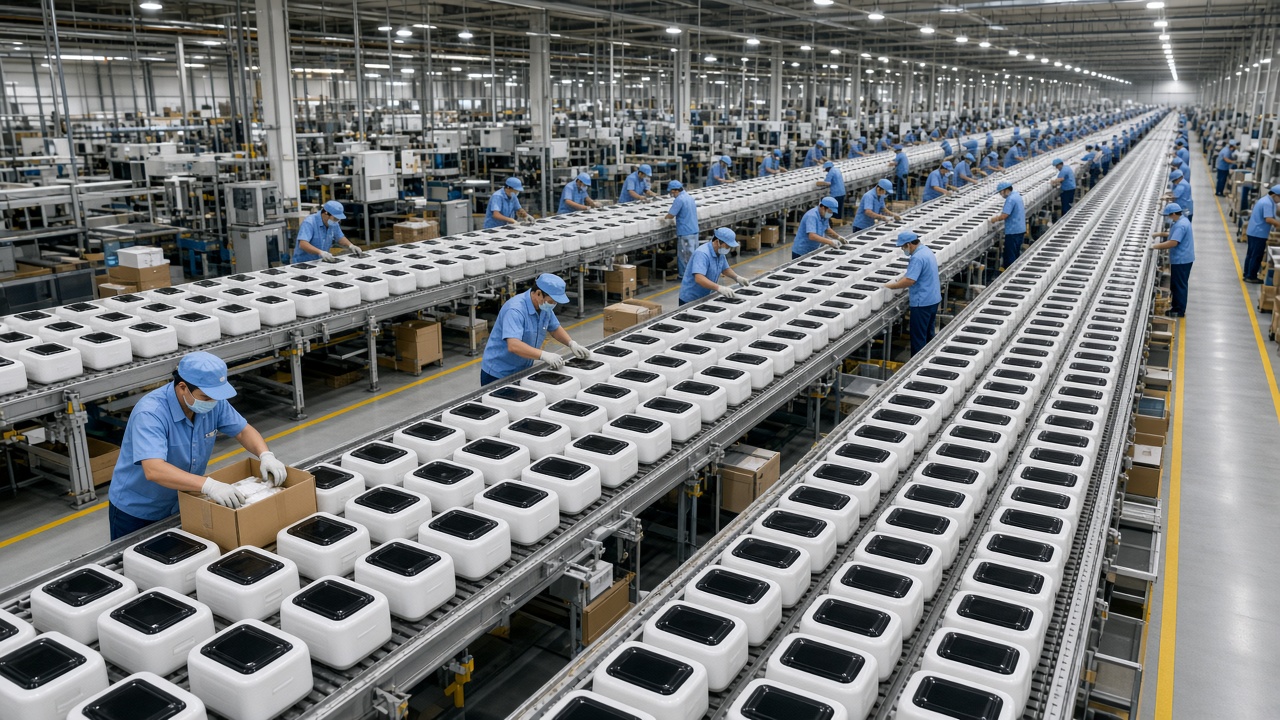
Alibaba is a business-to-business wholesale marketplace. The prices listed are factory or wholesale prices — what a business pays before markup, not what a consumer pays in a shop. By the time a product reaches a retail shelf in the US or Europe, it has typically passed through a factory, an exporter, an importer, a distributor, and a retailer, with each adding their margin. Buying directly from the factory on Alibaba removes most of those intermediaries.
A product that retails for $30 in a US store might have a factory cost of $4–$6. That gap is not profit — most of it is the accumulated cost of freight, import duties, warehousing, distribution, marketing, and retail margin.
2. Labour Costs in China Are Lower Than in Western Countries
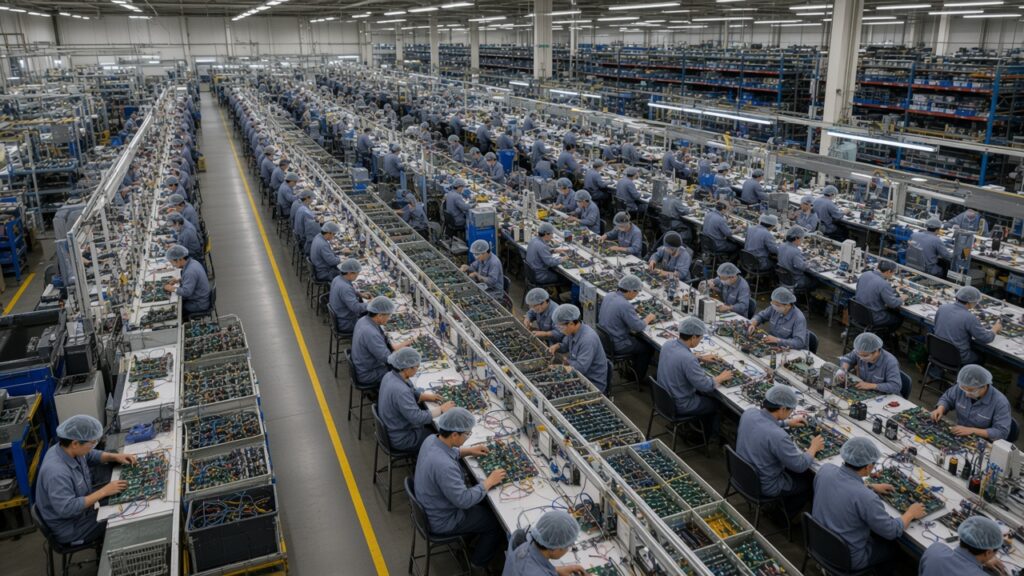
Manufacturing labour in China costs significantly less than in the United States, Western Europe, or Australia. While Chinese wages have risen substantially over the past two decades — particularly in coastal manufacturing hubs like Guangdong and Zhejiang — they remain well below Western levels for most factory work.
This is the most commonly cited reason for China’s manufacturing cost advantage, and it is real, though it is not the only factor. For labour-intensive products like garments, footwear, and hand-assembled electronics, the labour cost difference is significant. For highly automated products, the difference is smaller.
3. China Has an Exceptionally Dense Supply Chain
China’s manufacturing clusters mean that a factory making a product often has its raw material suppliers, component manufacturers, packaging suppliers, and logistics providers within a short distance. This density dramatically reduces the cost and time of sourcing inputs.
A toy factory in Chenghai, Guangdong, might be able to source plastic pellets, printed packaging, electronic components, and finished samples from suppliers within a 30-kilometre radius — all in a matter of days. A factory trying to do the same thing in a country without this ecosystem would face higher costs and longer lead times at every step.
4. Economies of Scale Are Enormous
China’s manufacturing base produces for the entire world. A factory making a product for dozens of international buyers across multiple countries achieves economies of scale — in tooling, in raw material purchasing, and in process efficiency — that a smaller factory serving only a local market cannot match.
This scale also allows Chinese factories to maintain dedicated production lines, invest in specialised equipment, and build deep expertise in specific product categories — all of which reduce per-unit cost.
5. The Prices Are Lower in Part Because They Exclude Freight and Duties
Alibaba prices are typically quoted as EXW (Ex Works — price at the factory gate) or FOB (Free On Board — price including domestic freight to the port). They do not include international freight, import duties, or last-mile delivery in the buyer’s country. These costs can add 30–60% to the factory price by the time goods reach the buyer’s warehouse.
When comparing an Alibaba price to a retail price, you are comparing the factory cost to the fully landed retail price — which is not an apples-to-apples comparison. The correct comparison is factory price versus the equivalent wholesale price in your market, which is a narrower gap.
Does a Low Price on Alibaba Mean Low Quality?
Not necessarily, but the relationship between price and quality on Alibaba is real and worth understanding. Chinese factories produce across a wide quality spectrum. The same factory may offer the same product at multiple price points depending on the material specification, quality control standard, and packaging. A buyer who selects the cheapest listing without specifying quality requirements will typically receive the lowest-quality version.
The cheapest supplier for a given product is not always a bad supplier — but it warrants questions: Why is this supplier cheaper than the others? Is it a different material specification? A smaller, less established operation with lower overheads? A temporary promotional price? Or simply a more efficient factory that passes on its cost advantage?
Ordering a sample before committing to a production order, and arranging a pre-shipment inspection on the production batch, are the most reliable ways to verify that the quality matches the specification you agreed — regardless of the price level.
How Do You Know If the Price You Are Quoted Is Fair?
One way is to cross-reference the Alibaba price against what the same type of supplier charges Chinese domestic buyers on 1688.com — Alibaba’s domestic platform. If an Alibaba supplier is quoting you significantly more than their 1688 listings show for the same product, there may be room to negotiate. If the Alibaba price is already close to the 1688 price, the supplier is quoting competitively.
MandarinDesk’s Price Benchmark Check service searches both 1688 and Alibaba for comparable listings and gives you a reference point for the market price, so you can judge whether the quote you have received is reasonable before committing to an order.
Related reading
Need a hand?
Tell us what you need done in China. We reply within 24 hours with a fixed price and timeline.
Get a free quote →