What Does MOQ Stand For? How Minimum Order Quantities Work — and How to Negotiate Them With Chinese Suppliers
MOQ — minimum order quantity — is the smallest number of units a factory will produce in a single order. It is one of the first numbers a Chinese supplier gives you, and one of the most negotiable. Understanding why factories set MOQs the way they do is the key to getting them down.
Key facts at a glance
• MOQ stands for Minimum Order Quantity — the smallest number of units a supplier will accept per order or per SKU
• MOQs exist because factories need to cover setup costs, material waste, and minimum run efficiency
• Typical MOQ range from Chinese factories: 100–5,000 units depending on product type and customization level
• MOQ is negotiable — especially on first orders, in exchange for a higher unit price or commitment to future orders
• Alibaba listings show “Min. Order” figures that are often starting points, not fixed minimums
What does MOQ mean, and why do factories set them?
MOQ (minimum order quantity) is the minimum number of units a manufacturer will produce or sell in a single purchase order. A factory quoting “MOQ: 500 pcs” means it will not accept an order for fewer than 500 units of that product at the quoted price.
Factories set MOQs for practical production reasons, not arbitrarily:
- Machine setup time: Configuring a production line, changing molds, loading raw materials, and running test pieces takes hours. That fixed cost must be spread across enough units to make a run economically viable.
- Raw material minimums: Fabric mills, chemical suppliers, and component manufacturers have their own minimum quantities. A factory buying custom fabric for your order cannot buy 50 meters — the mill’s minimum may be 500 meters.
- Packaging production: Custom printed boxes have their own MOQ from the packaging supplier, often 500–2,000 units for a custom print run.
- Quality efficiency: Shorter runs have higher per-unit defect rates because production workers are still optimizing settings. Many factories simply decline very small runs to protect their quality record.
What are typical MOQs by product category in China?
| Product Category | Typical MOQ Range | Main Driver |
|---|---|---|
| Apparel / Garments | 100–500 pcs per style/color | Fabric minimums, cut-and-sew setup |
| Consumer electronics / accessories | 500–2,000 pcs | PCB production, firmware setup, testing |
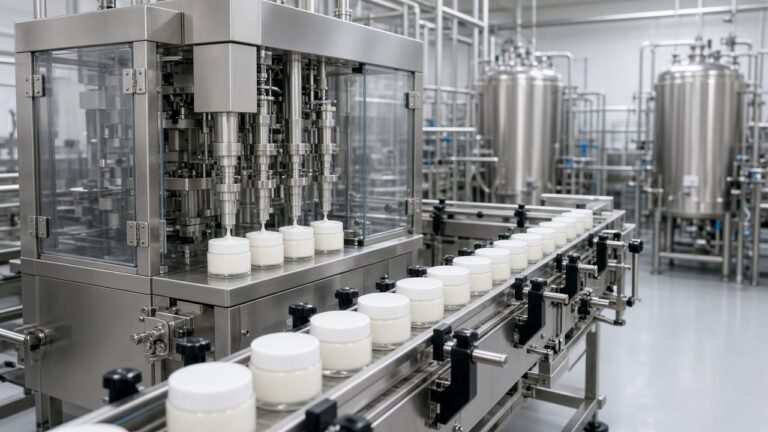
| Cosmetics & skincare | 300–1,000 pcs | Batch filling equipment, lab testing |
| Toys (custom design) | 1,000–3,000 pcs | Mold costs, compliance testing amortization |
| Promotional items / gifts | 100–500 pcs | Engraving or print setup |
| Furniture / home goods | 50–300 pcs | Material batch, container fill |
| Supplements / nutraceuticals | 1,000–5,000 units | Batch blending, capsule filling, lab testing |
| Custom packaging only | 500–2,000 pcs | Print plate setup, minimum press run |
These ranges assume custom branding or labeling. Stock items (catalog products with no customization) typically have no MOQ or a very low one — 1 or 12 units — because no setup work is required.
How do you negotiate a lower MOQ with a Chinese supplier?
MOQ is negotiable in almost every case, but the approach matters. Here are the most effective tactics:
This is the most reliable approach. The factory’s concern is covering fixed costs — if you compensate by paying more per unit, the math works for them. Explicitly say: “I understand your MOQ is 1,000 units. I would like to order 300 units at a higher unit price on this first order.” Let them counter.
Custom colors, custom labels, and custom packaging each add their own MOQ. Ordering a stock product in a standard color with just a hang tag or simple label instead of a full custom box can cut the effective MOQ by 50–80%. Add customization on subsequent orders once you have validated the product.
Factories respond to total relationship value. A written commitment to a larger follow-up order — “I will order 1,000 units within 90 days if this first run of 300 meets spec” — gives the factory reason to accept a low first-order quantity. This only works if you are genuinely likely to follow through.
Some factories, especially for supplements and cosmetics, offer “shared MOQ” arrangements where multiple buyers participate in one production batch. You receive your labeled units; another buyer receives theirs. This is common in private label cosmetics and can bring effective minimums to 100–200 units.
Different factories have different fixed cost structures. A factory running at 60% capacity may accept a low first order that a fully-booked factory would refuse. Requesting quotes from 5–8 factories gives you leverage and options.
The Alibaba “Min. Order” figure is a starting point, not a wall
Alibaba listings show minimum order quantities for each product, but these are the factory’s standard terms — not a hard limit on what they will discuss. The majority of Alibaba suppliers have accepted smaller first orders from buyers who communicated clearly, offered to pay a higher unit price, or demonstrated they were serious long-term customers. The worst a supplier can say is no, and asking costs nothing.
What is the difference between MOQ per SKU and MOQ per order?
This distinction matters significantly when buying multiple product variations:
- MOQ per SKU: The factory requires a minimum of, say, 500 units per color or size. If you want 3 colors, the minimum order is 1,500 units total (500 × 3). This is the more common and more demanding structure.
- MOQ per order: The factory requires a minimum total order value or quantity, but you can distribute that across SKUs. 500 units total, split 200 red + 200 blue + 100 green, for example. This is more flexible and common for apparel and accessories.
Always clarify in your RFQ whether the MOQ applies per SKU or per total order. Many disputes arise because the buyer assumed per-order and the factory meant per-SKU.
Low MOQ suppliers on Alibaba are often trading companies, not factories
Listings advertising MOQ of 1 or 10 units are almost always trading companies, not manufacturers. They source from actual factories and add a margin. This is not necessarily a problem for small test orders — but their prices are higher, their quality control is indirect, and they have no ability to modify the product. For private label or any customization, verify you are dealing with the manufacturer. Ask for the factory’s business license (营业执照), which will show if the company is classified as a manufacturer (制造商) or a trading company (贸易公司).
Frequently asked questions
Understanding MOQ is the first step — knowing which factories will work with your order size, and how to negotiate terms that make the first order viable, is where experience matters. At MandarinDesk, we pre-screen suppliers for buyers at different order volumes and negotiate initial terms on our clients’ behalf. Contact us to discuss your sourcing requirements.
MOQ vs MOP: What Is the Difference?
MOQ (Minimum Order Quantity) refers to units. MOP (Minimum Order Price) refers to the minimum total value of an order in currency — for example, $500 USD. Some suppliers use MOP instead of or in addition to MOQ, particularly for wholesale buyers who order mixed products.
Why are MOQs so high on Alibaba?
MOQs on Alibaba often reflect the factory’s real production minimums for custom or large-batch items. For standard products, the listed MOQ is often a starting point for negotiation, not a firm floor. Contacting suppliers directly with a specific request and explaining your business often leads to lower MOQs than what the listing states.
Related reading
Need a hand?
Tell us what you need done in China. We reply within 24 hours with a fixed price and timeline.
Get a free quote →