Alibaba vs AliExpress: What’s the Difference and Which One Should You Use?
Alibaba and AliExpress are both owned by Alibaba Group, but they serve completely different purposes. Choosing the wrong one for your situation wastes time and money. This guide explains exactly what each platform does, who it is for, and when to use each one.
What Is Alibaba?
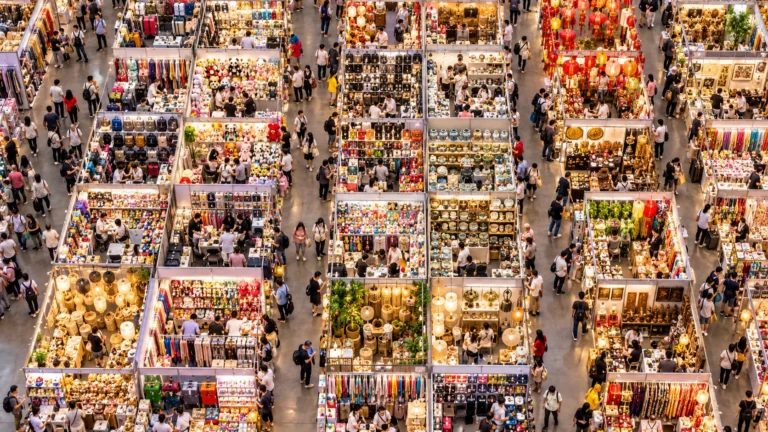
Alibaba (alibaba.com) is a business-to-business (B2B) wholesale marketplace. It connects international buyers with Chinese manufacturers and trading companies. Buyers on Alibaba are typically businesses: retailers, importers, Amazon sellers, or brands looking to source products in bulk. Minimum order quantities are usually measured in hundreds or thousands of units, prices are negotiable, and transactions often involve wire transfers and formal purchase orders.
What Is AliExpress?
AliExpress (aliexpress.com) is a business-to-consumer (B2C) retail marketplace. It is designed for individual buyers purchasing single items or small quantities for personal use. Sellers on AliExpress are mostly small Chinese businesses selling directly to end consumers around the world. There are no minimum order requirements, prices are fixed (not negotiable), and payment is handled through the platform with buyer protection built in.
Alibaba vs AliExpress: Side-by-Side Comparison
| Alibaba | AliExpress | |
|---|---|---|
| Who it is for | Businesses buying in bulk | Individuals buying single items |
| Minimum order | Usually 50–1,000+ units (varies by supplier) | No minimum — buy one unit |
| Prices | Negotiable, lower unit cost at volume | Fixed, higher per-unit price |
| Payment | T/T wire transfer, trade assurance, L/C | Credit card, PayPal, AliExpress Pay |
| Shipping | International freight (sea or air), buyer arranges | Standard post or ePacket, included in listing price |
| Delivery time | Weeks to months (depends on production + freight) | Days to weeks (ready stock) |
| Buyer protection | Trade Assurance on qualifying orders | AliExpress Buyer Protection (90 days) |
| Customisation | Yes — private label, packaging, specifications | No — buy what is listed |
| Language | English | English |
When Should You Use Alibaba?
Use Alibaba when you are importing products to sell, not for personal use. Specific situations where Alibaba is the right choice:
- You are sourcing inventory for an Amazon, Shopify, or retail business and need consistent supply at wholesale prices.
- You want to put your own brand or logo on a product (private label manufacturing).
- You need to customise the product — materials, dimensions, colours, packaging.
- You are buying in quantities large enough to justify a production run (typically 100 units or more).
- You want to build a long-term relationship with a factory rather than buying from resellers.
When Should You Use AliExpress?
Use AliExpress when you are buying for personal use or in very small quantities. Situations where AliExpress makes sense:
- You want to test a product concept before committing to a bulk order — buying one or two units is easy and fast.
- You need a small quantity for personal use: a replacement part, a household item, clothing, or accessories.
- You want simple payment with buyer protection and no minimum order.
- You are dropshipping — fulfilling individual customer orders by having the AliExpress seller ship directly to your customer.
Are the Prices on AliExpress Always Higher Than Alibaba?
Per unit, yes — usually significantly higher. AliExpress sellers buy from factories or wholesalers, mark up the price, and sell individual units. By the time the product reaches the AliExpress listing, it may be two to five times more expensive per unit than the Alibaba bulk price for the same item.
However, Alibaba prices only become advantageous once you meet the minimum order quantity. If you need ten units, AliExpress will almost certainly be cheaper in total cost even though the per-unit price is higher, because Alibaba suppliers will not sell ten units at their bulk price.

Can You Use AliExpress to Test a Product Before Ordering From Alibaba?
Yes, and this is a common strategy. Buying a product from AliExpress lets you evaluate quality, check dimensions, and test functionality before committing to a bulk order on Alibaba. It is a low-risk way to validate that a product is worth importing.
Keep in mind that the AliExpress product may not be from the same factory as the Alibaba supplier you eventually work with, so quality may differ. Always order samples from your actual Alibaba supplier before confirming production.
Is There a Third Option for Lower Prices Than Either Platform?
Yes: 1688.com. This is Alibaba Group’s domestic Chinese wholesale platform, designed for Chinese buyers. The same factories that list on Alibaba also list on 1688, often at the price they charge Chinese domestic buyers — which can be 30 to 50 percent lower than the Alibaba export price.
The challenge is that 1688 is entirely in Chinese, accepts only Chinese payment methods, and ships only within mainland China. See our guide on how to use 1688.com as an international buyer for a detailed walkthrough.
How Do You Know If an Alibaba Supplier Is Legitimate?
Key signals to check on an Alibaba supplier profile:
- Verified Supplier badge: Alibaba has physically audited the company and confirmed it is a real business.
- Years in operation: Longer trading history on the platform reduces (but does not eliminate) risk.
- Response rate and time: Suppliers who reply quickly and consistently are easier to work with.
- Trade Assurance: Orders placed through Trade Assurance have some protection if the goods do not arrive or do not match the description. Use it for your first order with any new supplier.
- Factory audit reports: Some suppliers have third-party audit reports available. These give a more detailed picture of production capacity and quality management.
If you want to check what a supplier’s Chinese customers are saying about them — in their own language — our Supplier Review Summary service translates their reviews from 1688 into English, including any recurring complaints or red flags.
Which Platform Should a First-Time Importer Use?
Start with AliExpress to test products and understand what is available. Once you have identified a product you want to import in volume, move to Alibaba to find a factory, negotiate pricing, and place a bulk order. Use 1688 to benchmark the prices you are being quoted on Alibaba against what Chinese buyers actually pay.
If you need help at any stage — translating supplier messages, checking whether a quote is fair, or understanding what is in a contract — MandarinDesk’s services for international buyers are designed for exactly this kind of work.
Related reading
Need a hand?
Tell us what you need done in China. We reply within 24 hours with a fixed price and timeline.
Get a free quote →