

What Is AQL? A Plain-English Guide to Quality Inspection Sampling
AQL stands for Acceptable Quality Level. It is an international standard that tells inspectors how many units to check in a batch, and how many defects are allowed before a shipment is considered to have failed. If you are importing goods from China and have ever seen “AQL 2.5” or “AQL 1.0” mentioned on a quality inspection report, this guide explains exactly what those numbers mean.
Why Can’t Inspectors Check Every Unit?
When a factory produces 5,000 units of a product, checking every single unit would be impractical — it would take too long, cost too much, and in some cases (such as testing whether a product can withstand a drop) would destroy the item being tested. AQL sampling solves this by defining a statistically valid way to check a representative portion of the batch and draw a reliable conclusion about the whole.
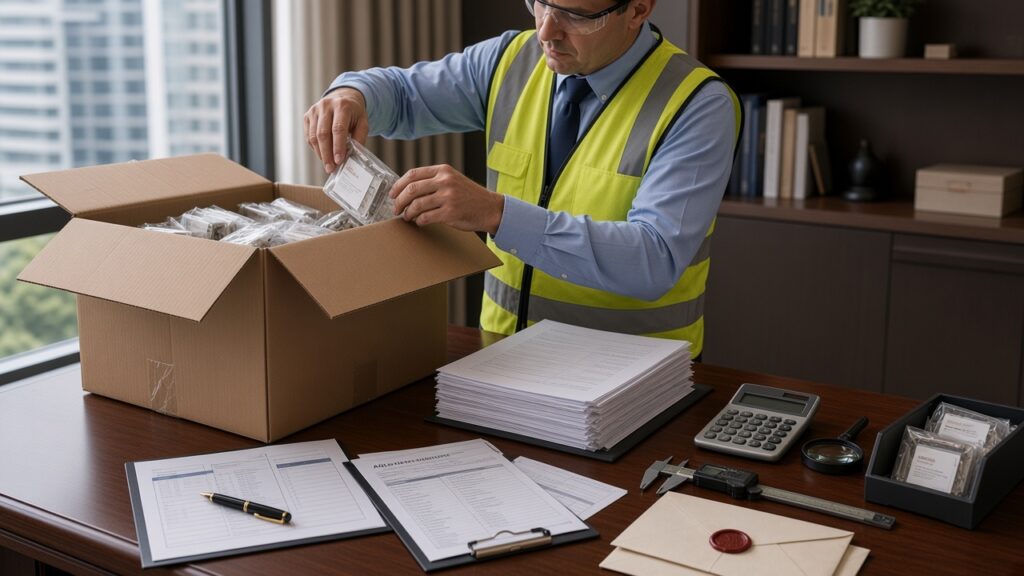
The AQL standard is defined in ISO 2859-1 (internationally) and also in ANSI/ASQC Z1.4 (the US version, which produces the same tables). Despite the different names, buyers and inspectors worldwide generally use the same tables and the same terminology.
How Does AQL Sampling Work?
The process works in two steps:
- Determine the sample size: Based on the total batch size and an inspection level (usually General Inspection Level II for most consumer goods), the AQL table tells you how many units to randomly select and inspect. For example, a batch of 1,201–3,200 units at General Level II gives a sample size of 125 units.
- Determine the acceptance and rejection numbers: Based on the AQL level chosen for each defect category, the table tells you the maximum number of defectives allowed in the sample before the batch is rejected. If the sample contains more than this number, the inspection fails.
What Do the AQL Numbers Mean?
The AQL number represents the maximum acceptable percentage of defective units in a batch. Common AQL levels used in consumer goods inspections are:
- AQL 0.0 or 0.065: Zero defects allowed. Used for critical safety defects — anything that could injure a user or cause a product to be legally non-compliant.
- AQL 1.0: Tight standard. Often used for high-value products or categories where even minor quality issues affect the product’s function significantly.
- AQL 2.5: The most common standard for major defects in consumer goods. At AQL 2.5 with a sample of 125 units, the batch passes if there are 7 or fewer major defects in the sample, and fails if there are 8 or more.
- AQL 4.0: A more lenient standard, often applied to minor cosmetic defects that do not affect function. At AQL 4.0 with a sample of 125 units, the batch passes with 10 or fewer minor defects.
What Is the Difference Between Critical, Major, and Minor Defects?
Before an inspection, the buyer (or the buyer’s quality standard) needs to classify what counts as a critical, major, or minor defect for their specific product. The classifications are:
- Critical defect: A defect that makes the product unsafe, potentially illegal, or completely unusable. Examples: sharp edges on a children’s toy, missing safety label on an electrical product, structural failure. The standard for critical defects is typically AQL 0 — zero tolerance.
- Major defect: A defect that significantly affects the product’s function or appearance in a way that most end customers would reject it. Examples: a zip that does not close properly on a bag, a colour that is significantly different from the approved standard, a logo that is printed in the wrong position. Standard: AQL 2.5.
- Minor defect: A cosmetic imperfection that does not affect function and that most customers would accept. Examples: a small scuff on the inner surface of packaging, a minor thread irregularity on the inside of a garment, a slight colour variation that falls within tolerance. Standard: AQL 4.0.
These classifications and the AQL levels that apply to them should be agreed with the factory before production begins — not negotiated at the time of inspection.
What Happens During an AQL Inspection?
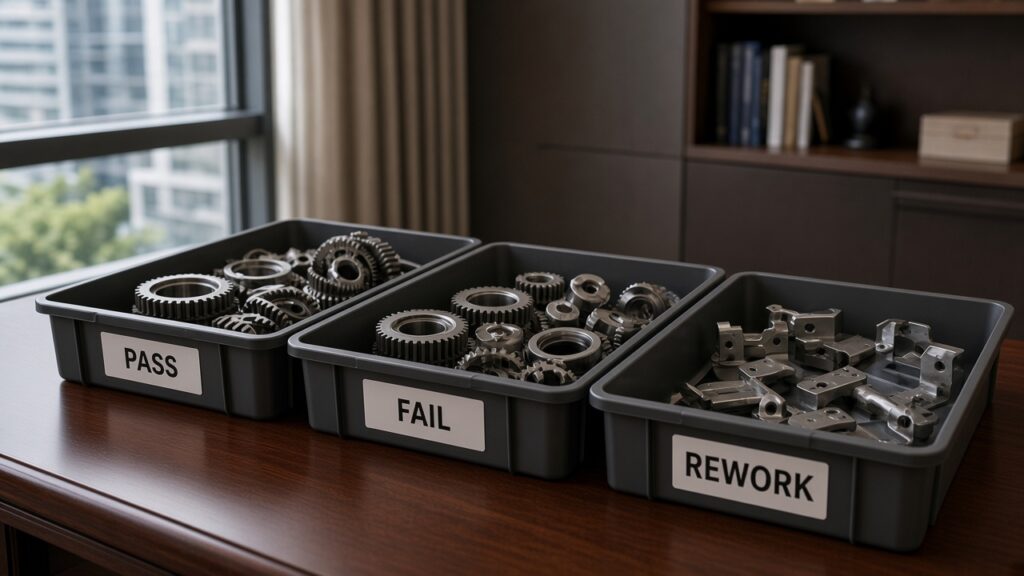
An inspector visits the factory when at least 80% of the production run is complete. They randomly select the required sample size from the finished goods, then check each unit against the buyer’s product specification and defect classification list. Each defect found is recorded and classified. At the end, the inspector counts the defects in each category and compares them to the acceptance numbers from the AQL table.
The inspection report shows the total defects found, the AQL verdict (pass or fail) for each category, and typically photos of any defects found. The buyer reviews the report and decides whether to approve shipment, ask for rework, or reject the batch.
What Does an AQL Inspection Cost?
Third-party inspection companies typically charge $200–$350 per man-day in China. Most standard AQL inspections for consumer goods are completed in one day. Some complex products or large batches may require two inspector days.
Can You Do a Basic Quality Check Without a Full AQL Inspection?
For smaller orders or buyers who want a lightweight check before committing to a full inspection, it is possible to have the factory send photos and a video walkthrough of a production sample. This is not a substitute for a physical AQL inspection — an inspector can check dimensions, test functions, and do a drop test in ways that photos cannot — but it is significantly better than approving shipment sight unseen.
MandarinDesk’s Sample Photo Review service gives buyers a structured English checklist based on the photos the factory sent — covering what to approve, what to query, and what to ask the factory to fix before the full batch ships. It costs $25 per batch and is typically completed within one business day.
What Should You Specify in Your Quality Requirements?
To run an effective AQL inspection, you need to give the inspector (or the factory) a clear quality specification that defines:
- The AQL level for critical, major, and minor defects
- The specific defects that fall into each category, with examples where possible
- Dimensional tolerances — how much variation in size or weight is acceptable
- Colour standards — if colour consistency matters, a physical approved sample or a Pantone reference is needed
- Functionality requirements — which functions must be tested and what the pass/fail criteria are
- Packaging requirements — what the packaging must look like and what the carton markings must include
The more clearly you document these requirements before production, the less room there is for disagreement when the inspection takes place.
Related reading
Need a hand?
Tell us what you need done in China. We reply within 24 hours with a fixed price and timeline.
Get a free quote →